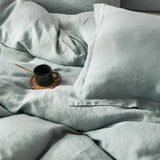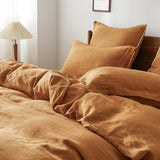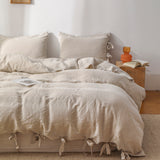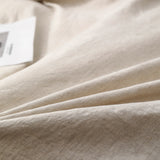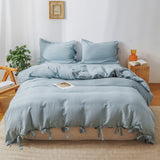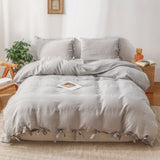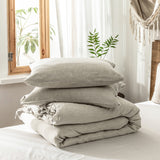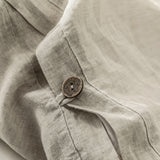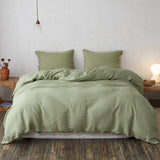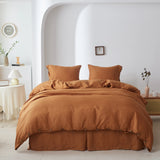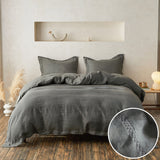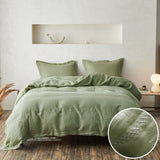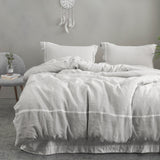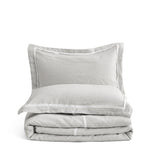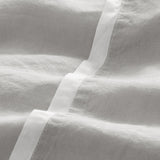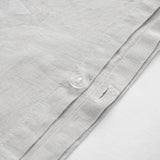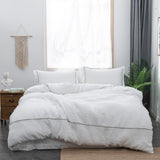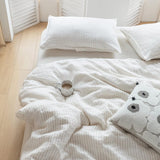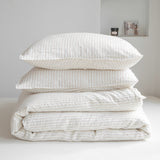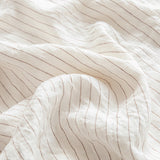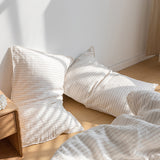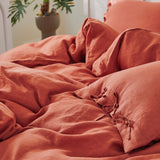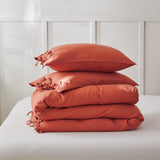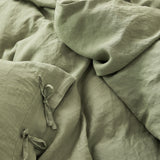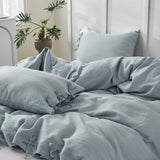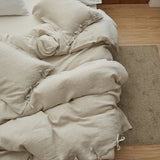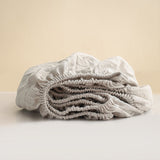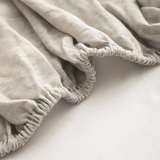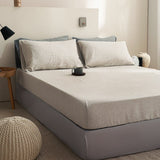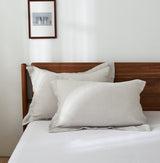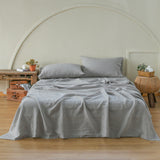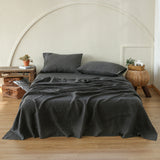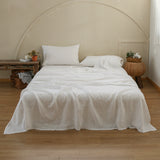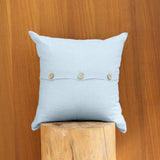


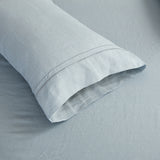


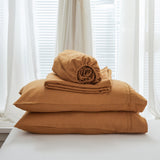





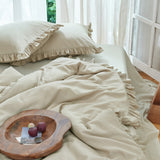
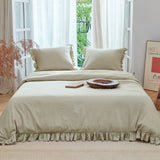

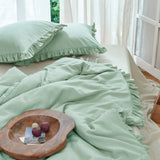









One of the reasons people love linen is its natural texture, breathability, and timeless appearance. However, if you've recently purchased new linen bedding or linen home textiles, you may notice that the fabric feels slightly crisp at first.
The good news is that this is completely normal.
In fact, one of linen's most celebrated qualities is that it becomes softer with every wash and use. Unlike many fabrics that wear out over time, linen continues to improve, becoming more comfortable while maintaining its durability.
If you're wondering how to make linen softer, this guide will explain why linen feels firm initially and share the best methods to achieve that relaxed, cloud-like softness people love.
Why Does New Linen Feel Stiff?
Before discussing how to soften linen, it helps to understand why linen may feel less soft than expected when it's new.
Linen is made from flax fibers, which are naturally stronger and longer than cotton fibers.
Because of this structure, new linen often has:
A crisp hand feel --- Slight texture --- Natural body --- Structured drape
These characteristics are actually signs of quality linen.
As the fibers relax through washing and everyday use, the fabric gradually becomes softer without losing strength.
Does Linen Naturally Get Softer Over Time?
Yes. One of linen's greatest advantages is that it becomes softer with age.
Every wash helps:
✔ Relax the fibers ✔ Increase flexibility ✔ Improve softness ✔ Enhance comfort
This is one reason high-quality linen bedding is often considered a long-term investment.
Many linen enthusiasts say their favorite sheets are those they've owned for years.
How Long Does It Take for Linen to Become Soft?
The timeline depends on several factors:
- Fabric quality
- Linen weight (GSM)
- Washing frequency
- Finishing process
Generally:
Stone-Washed Linen --- Usually feels soft immediately and becomes even softer after several washes.
Standard Linen --- May require 3–5 washes before reaching its optimal softness.
Heavyweight Linen --- Can take longer but often develops exceptional softness over time.
7 Proven Ways to Make Linen Softer
1. Wash Linen Before First Use
One of the easiest ways to soften linen is to wash it before using it.
Many manufacturers recommend washing linen bedding immediately after purchase.
How to do it:
- Use cold or warm water
- Select a gentle cycle
- Use mild detergent
- Avoid overcrowding the washer
The first wash begins relaxing the flax fibers and improves comfort significantly.
2. Use a Gentle Detergent
The detergent you choose affects how linen feels.
Choose:
✔ Mild liquid detergent
✔ Natural detergents
✔ Fabric-safe formulas
Avoid:
✘ Harsh chemicals
✘ Heavy fragrances
✘ Optical brighteners
These products can coat the fibers and reduce linen's natural softness.
3. Avoid Fabric Softeners
This surprises many people.
Traditional fabric softeners may make linen feel temporarily softer, but they often leave a residue on the fibers.
Over time, this buildup can:
Reduce breathability --- Decrease moisture absorption --- Diminish linen's natural performance
For best results, allow linen to soften naturally.
4. Tumble Dry on Low Heat
Gentle tumble drying can help soften linen fibers.
Best practice:
- Use low heat
- Remove while slightly damp
- Avoid overdrying
The movement inside the dryer helps relax the fabric structure and reduce stiffness.
5. Air Dry for a Relaxed Finish
Many linen lovers prefer air drying.
Benefits include:
Preserves fiber strength
Reduces wear
Maintains fabric integrity
To maximize softness:
Shake the linen before hanging it to dry.
This helps loosen fibers and minimize stiffness.
6. Iron Less, Embrace Natural Linen
One of the biggest misconceptions about linen is that it must be perfectly smooth.
Modern interior design increasingly embraces linen's naturally relaxed appearance.
The slight wrinkles are part of its charm.
Less ironing often allows the fabric to retain a softer, more natural hand feel.
7. Use Linen Regularly
The simplest way to soften linen is also the most effective:
Use it.
Sleeping on linen sheets, using linen pillowcases, or enjoying a linen throw blanket naturally helps the fibers relax over time.
Just like a favorite pair of jeans, linen becomes more comfortable the more you use it.
Common Mistakes That Make Linen Feel Rough
Using Too Much Detergent
Excess detergent residue can leave linen feeling stiff.
Use only the recommended amount.
Washing With Heavy Fabrics
Avoid washing linen with:
- Heavy towels
- Thick blankets
- Jeans
These fabrics create excessive friction and may damage delicate flax fibers.
High Heat Drying
Excessive heat can:
- Stress fibers
- Increase wrinkling
- Reduce softness over time
Always choose low temperatures.
Using Bleach
Bleach weakens natural fibers and may negatively affect the texture of linen.
Does Stone-Washed Linen Feel Softer?
Yes. Stone washing is a finishing process that helps soften linen before it reaches consumers.
Benefits include:
Softer feel from day one --- Relaxed appearance --- Reduced shrinkage --- Enhanced comfort
This is why many premium linen bedding collections feature stone-washed linen.
Why Linen's Softness Is Different From Cotton
Consumers often compare linen and cotton softness.
Cotton Softness
Feels:
Smooth --- Plush --- Uniform
Linen Softness
Feels:
Relaxed --- Airy --- Naturally textured --- Lightweight
Rather than becoming silky like sateen cotton, linen develops a unique softness that many people describe as:
"Comfortable, breathable, and effortlessly luxurious."
The Benefits of Soft Linen Bedding
Once linen reaches its ideal softness, it offers a remarkable sleep experience.
Benefits include:
Breathability --- Promotes airflow and comfort throughout the night.
Moisture Management --- Helps keep bedding feeling fresh.
Durability --- High-quality linen can last for many years.
Year-Round Comfort --- Cool in summer and cozy in cooler seasons.
Timeless Style --- Linen's relaxed elegance complements modern bedrooms beautifully.
Final Thoughts: The Best Way to Make Linen Softer
If you're wondering how to make linen softer, the answer is surprisingly simple:
Wash it, use it, and give it time.
Linen is unique because it improves with age. Every wash, every night of sleep, and every season of use helps transform crisp new linen into a fabric that feels wonderfully soft, breathable, and inviting.
Rather than wearing out, quality linen develops character and comfort over time, making it one of the most rewarding textiles for bedding, home decor, and everyday living.
The patience pays off—and the result is a level of comfort that few fabrics can match.